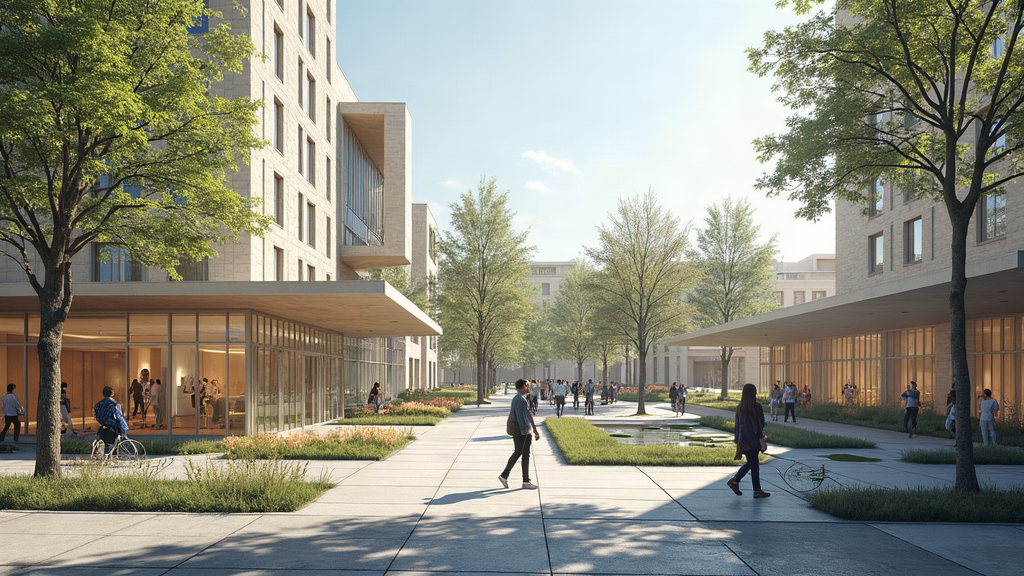
Design projects are an exciting frontier where creativity meets practicality, especially at prestigious institutions like Harvard’s Graduate School of Design (GSD). These initiatives exemplify design innovation, seamlessly integrating various disciplines such as architecture, urban planning, and landscape design to address real-world challenges. Students dive into the complexity of their projects, tackling community issues that span from ecological sustainability to economic revitalization. With guidance from experienced faculty, they explore the intersection of community needs and inventive architectural solutions, fostering a culture of collaboration within design studios. As this year’s diverse selection of architecture projects unfolds, we witness firsthand the breathtaking potential of thoughtful design in shaping our future.
Creative endeavors in design encompass a wide range of multidisciplinary initiatives that empower students to reshape our environments. At esteemed design schools, students engage in varied planning projects that challenge conventional approaches while promoting sustainable practices. Through innovative collaborative workshops, these aspiring designers examine urban regeneration strategies and contribute to the evolution of contemporary architectural landscapes. By delving into the intricacies of design methodologies, the next generation of architects and planners aims to redefine public spaces and enhance community engagement. In this dynamic landscape, the role of design education becomes increasingly vital, leveraging fresh perspectives to cultivate forward-thinking solutions.
Design Projects Driving Urban Renewal
The complex challenge of revitalizing urban spaces is tackled head-on by students at the Graduate School of Design (GSD). This year’s design projects delve into the intricacies of urban renewal, with an emphasis on rejuvenating communities deeply affected by industrial decline. For instance, students in Ignas Bunster-Ossa’s studio are focusing on McKeesport, a former steel town, to explore how innovative architectural solutions can spark economic revival. By studying historical contexts and current site conditions, they aim to propose actionable designs that not only repurpose existing structures but also cultivate vibrant public spaces.
Design projects like these are pivotal in not only reshaping the urban landscape but also enhancing community resilience. By integrating elements of urban planning and local history into their designs, GSD students are redefining the standards of what successful regeneration looks like. This multifaceted approach encourages collaboration across disciplines – from architecture to landscape architecture – cultivating a deeper understanding of how space can impact social dynamics within a community. Ultimately, these projects serve as a testament to the power of thoughtful design in fostering economic and social betterment.
Innovations in Architectural Design
At the forefront of architectural innovation, the Graduate School of Design is cultivating a new generation of designers who challenge preconceived notions of space and functionality. With an emphasis on multidisciplinary collaboration, students are encouraged to think beyond traditional boundaries to create solutions that address contemporary urban issues. For example, Elizabeth Bowie Christoforetti’s studio work scrutinizes the pervasive issue of urban homogenization, aiming to develop designs that introduce diversity into post-industrial landscapes like the Shinagawa Ura waterfront in Tokyo. By engaging directly with stakeholders like Nippon Steel, students not only explore design variances but also consider the socio-economic ramifications of their proposals.
Such innovative approaches to architectural design reflect a larger trend in which designers must now consider environmental sustainability alongside aesthetic and cultural implications. Students are taught to explore the relationships between architecture, ecology, and urban life, leading to creative solutions that integrate natural elements into the built environment. As these design projects evolve, they embody a vital shift towards an architecture that serves both the needs of its surroundings and the people within them, paving the way for more sustainable living spaces.
The Intersection of Design and Urban Planning
The intersection of design and urban planning plays a critical role in shaping the future of cities. The Graduate School of Design emphasizes this connection through hands-on projects that reflect real-world challenges faced by communities. In the case of Danielle Choi’s studio, students examine how infrastructure, particularly in water management, influences urban landscapes and activities. This focus on the underlying systems presents an opportunity for students to create designs that not only address current ecological issues but also foresee future urban needs. By understanding the symbiotic relationship between infrastructure and urban spaces, students prepare to make a significant impact on modern city planning.
Moreover, the projects undertaken at GSD reinforce the importance of adaptability in urban design. As climate change and population dynamics shift, urban planners and designers must be equipped with innovative strategies to maintain the functionality and livability of cities. Through collaborative projects, students formulate comprehensive design concepts that engage multiple stakeholders, ultimately resulting in integrated solutions that address both pressing issues and long-term sustainability. These interdisciplinary projects serve as a foundation for equipping students to meet the challenges of 21st-century urban environments with creativity and foresight.
Embracing Complexity in Design
The theme of complexity echoes throughout the design projects showcased at the Graduate School of Design. As Dean Sarah Whiting aptly states, design is multifaceted, pulling from a variety of disciplines to solve intricate problems. Each option studio reflects this complexity, challenging students to incorporate various elements such as social dynamics, historical context, and environmental considerations into their designs. This nuanced approach not only enhances the educational experience but also prepares students to tackle the diverse challenges they will face in the professional realm.
Understanding that design is not a singular process, GSD encourages its students to embrace complexity as a fundamental element of their work. From engaging with community narratives to interpreting intricate site conditions, students are taught to navigate the layers of meaning in their projects. As they explore the intersection of design with policy, climate response, and cultural heritage, they create innovative solutions that resonate on multiple levels. Ultimately, this embrace of complexity ensures that their contributions to the fields of architecture and urban planning are both meaningful and impactful.
Revitalization through Sustainable Practices
Sustainability is central to the design projects at the Graduate School of Design, where students are exploring how eco-friendly practices can lead to the revitalization of urban environments. By examining case studies of communities like McKeesport, students are tasked with innovating designs that prioritize environmental stewardship while also fostering economic growth. This dual focus on sustainability and community engagement highlights the critical role of design in addressing global challenges such as climate change and urban decay.
Furthermore, GSD’s commitment to sustainable practices is evident in projects that integrate natural systems with architectural design. Students study how landscapes, waterways, and urban frameworks can work in harmony, creating resilient environments that adapt to future changes. Through their projects, students are not only learning about sustainable methodologies but are also becoming advocates for responsible design. This education equips them to advocate for solutions that can revitalize communities while preserving natural resources for future generations.
Complex Challenges in Landscape Architecture
Landscape architecture projects at the Graduate School of Design tackle some of the most complex environmental challenges of our time. For instance, students in Choi’s studio are exploring the implications of water infrastructure within the context of Colorado’s changing climate. This study not only highlights the need for innovative designs that can sustain water resources amid increasing demand but also encourages students to think creatively about how these infrastructures can enhance recreational opportunities and public spaces.
By focusing on the natural elements of landscape architecture, students learn to develop integrated designs that harmonize built environments with ecological systems. This dual focus is essential in creating urban landscapes that are both functional and environmentally friendly. As they engage with these complex challenges, students are inspired to create designs that reflect a deep understanding of the interplay between nature and urban life, positioning them to lead future advancements in landscape architecture.
The Role of Design Studios in Innovation
Design studios at the Graduate School of Design serve as incubators for innovation, where students collaborate across disciplines to address contemporary challenges. These studios emphasize a hands-on approach to design, allowing students to engage directly with real-world problems while harnessing their creativity. This environment is conducive to exploring novel ideas and strategies, making the design studios a vital component of the educational experience at GSD.
In each studio, students tackle unique issues tailored to their interests, resulting in a diverse range of design proposals that reflect the complexity of the urban environment. By fostering collaboration among architecture, urban planning, and landscape architecture students, these studios create a rich tapestry of insights and solutions. This integrative method not only enhances students’ learning but also propels innovation within the field, encouraging the development of cutting-edge projects that will shape the future of design.
Cultural Contexts Shaping Design Solutions
Understanding the cultural contexts in which design operates is crucial for creating relevant and meaningful solutions. Students at the Graduate School of Design are encouraged to consider local histories, community narratives, and socio-political factors in their design projects. This holistic approach ensures that their work resonates with the people it aims to serve, allowing for designs that are both innovative and culturally sensitive.
As they navigate these complexities, students are better equipped to create architecture that reflects the unique characteristics of its location. By engaging with community stakeholders and immersing themselves in the cultural landscape, GSD students develop a profound understanding of how design can mediate social interactions and foster community identity. This emphasis on cultural context is essential in producing designs that not only meet functional needs but also enrich the social fabric of urban environments.
Future Perspectives in Design Education
The future of design education lies in its ability to adapt to rapidly changing global dynamics. At the Graduate School of Design, this evolution is embraced through a curriculum that emphasizes innovation, collaboration, and interdisciplinary learning. By preparing students for the complexities of contemporary design challenges, GSD is setting a new standard for design education that prioritizes adaptability and responsiveness.
As societal needs shift and environmental challenges become more pressing, the integration of technology and sustainable practices in design education will be paramount. GSD actively incorporates these elements into its programs, ensuring that students are not only learning traditional design principles but also embracing cutting-edge methodologies. This forward-thinking approach positions future designers to lead with creativity and purpose, driving positive change in their communities and beyond.
Frequently Asked Questions
What are design projects at the Harvard Graduate School of Design?
Design projects at the Harvard Graduate School of Design (GSD) are comprehensive initiatives undertaken by students to address complex real-world challenges. These projects span various fields such as architecture, urban planning, and landscape architecture. They engage students in innovative design processes that incorporate multiple disciplines, allowing them to explore solutions for community renewal, environmental sustainability, and cultural relevance.
How does design innovation manifest in urban planning projects at GSD?
Design innovation in urban planning projects at the Harvard GSD is expressed through creative approaches to addressing contemporary urban challenges. Students work on projects that reimagine spaces and functionalities in urban environments, integrating new technologies and sustainable practices. These innovative strategies often lead to unique solutions that enhance urban living and promote community engagement.
What role do design studios play in the architecture projects at GSD?
Design studios at Harvard’s Graduate School of Design play a pivotal role in shaping architecture projects by providing a collaborative environment where students can apply theoretical knowledge to practical scenarios. These studios promote multidisciplinary engagement and allow students to experiment with various design methodologies, drawing upon historical, cultural, and environmental contexts to create impactful architectural solutions.
What are some examples of recent design projects focused on urban renewal?
Recent design projects at the Harvard GSD focusing on urban renewal include initiatives like exploring the revitalization of McKeesport, Pennsylvania, which addresses economic development through design. Other projects investigate the relationship between architecture and water dynamics in Tokyo’s Shinagawa Ura, emphasizing unique responses to urban homogenization. These projects exemplify how design can drive transformation in communities facing decline.
How does the Graduate School of Design incorporate interdisciplinary approaches in its design projects?
The Graduate School of Design incorporates interdisciplinary approaches by blending knowledge from architecture, landscape architecture, urban planning, and other fields. This holistic methodology allows students to consider policies, environmental issues, and cultural contexts in their design projects, enabling them to craft solutions that are not only aesthetically pleasing but also socially responsible and contextually relevant.
What can students expect from participating in option studios at GSD?
Students participating in option studios at Harvard’s GSD can expect an immersive experience where they tackle complex design challenges through hands-on projects. These studios encourage collaboration, critical thinking, and innovation, allowing students to develop their design skills while addressing real-world issues. Each studio focuses on diverse themes, providing a comprehensive exploration of design’s impact on society.
How do current design trends influence graduate design projects at GSD?
Current design trends greatly influence graduate design projects at GSD by encouraging students to integrate sustainability, technology, and inclusivity into their work. For instance, design projects may incorporate smart city concepts or resilient urban landscapes that respond to climate change, reflecting contemporary priorities. This engagement with current trends ensures that student designs are relevant and forward-thinking.
| Project Title | Description |
|---|---|
| Reimagining McKeesport | Revival of decaying steel towns through economic development and community renewal. |
| Architecture as Cultural Hypothesis for Shinagawa Ura | Exploration of the homogenization in post-industrial landscapes through redevelopment projects. |
| Minor Public Works of the Continental Divide | Study of how hidden water infrastructures can support Colorado’s freshwater transport and recreation needs. |
Summary
Design projects are at the heart of innovative solutions that address real-world challenges. Through various studios at Harvard’s Graduate School of Design, students are not only showcasing their skills but also reimagining communities and landscapes facing significant transformations. Each project embodies the complexity of design, incorporating diverse disciplines and considerations, which ultimately highlights the importance of thoughtful architectural and urban planning in today’s society.
Unlock the power of creativity with Autowp, the ultimate AI content generator and AI content creator plugin for WordPress. Seamlessly integrate Autowp into your website to effortlessly produce high-quality, engaging content tailored to your audience’s needs. Whether you’re a blogger, business owner, or digital marketer, Autowp’s cutting-edge technology helps streamline your content creation process, saving you time and boosting your SEO efforts. Discover more about this revolutionary tool by visiting [Autowp](https://autowp.app) today! To remove this promotional paragraph, upgrade to Autowp Premium membership.


